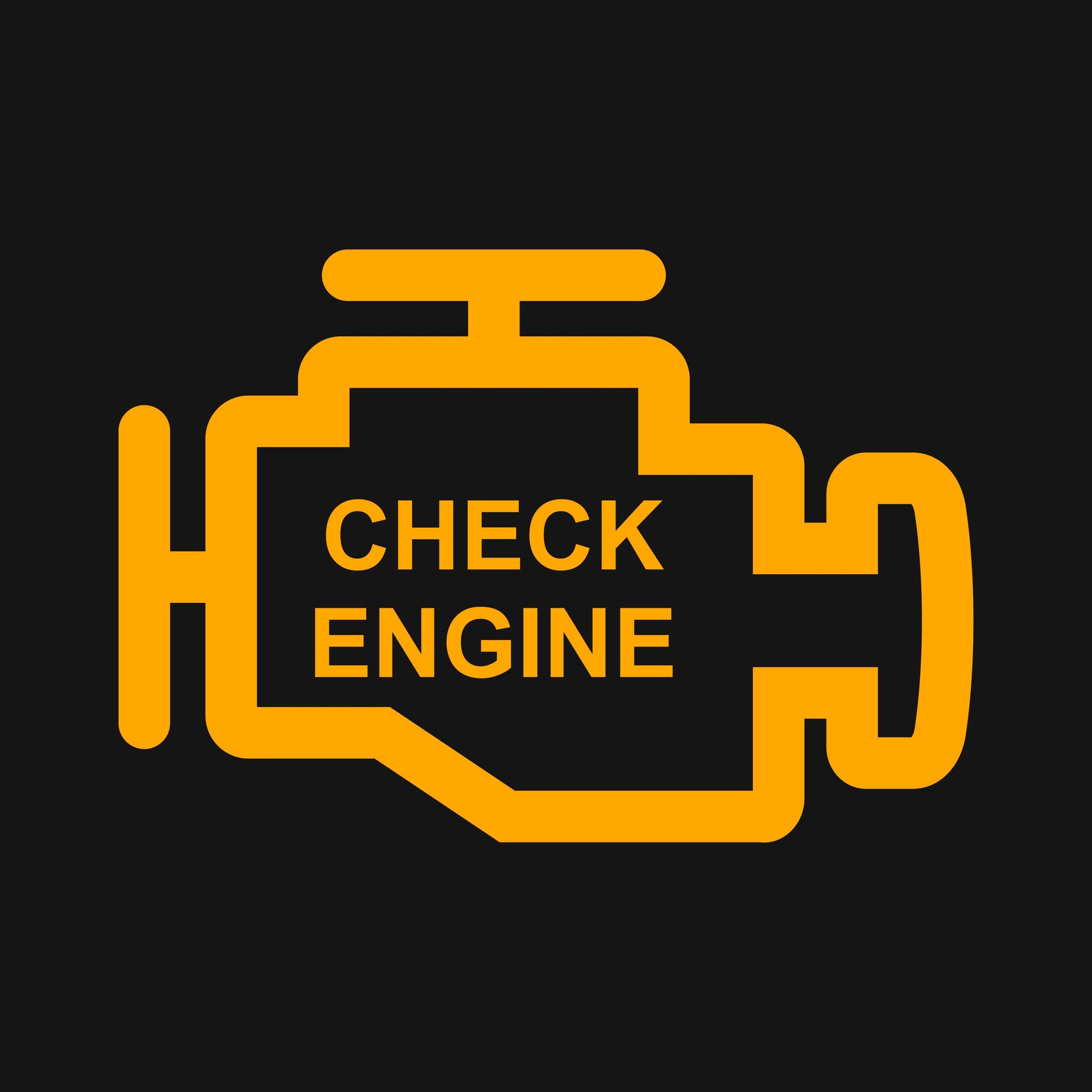

It’s a weird feeling when the check engine light comes on and the car seems perfectly fine. No shaking, no strange smells, no obvious drop in power, just that little icon staring back at you. A lot of drivers assume it must be a glitch, especially if the light turns off later.
The catch is that the light is usually reacting to something the computer noticed, not something you can always feel from the driver’s seat. Some problems really are minor, but others are early warnings that are easiest to fix now.
Catching it early is often the difference between a small repair and an expensive chain reaction.
What The Check Engine Light Is Actually Telling You
The check engine light is the vehicle’s way of saying the computer detected something outside its expected range, which could be related to emissions, fuel delivery, ignition, sensors, or airflow. That sounds broad because it is broad, and that’s why guessing based on feel can send you in the wrong direction.
Some issues are subtle enough that the vehicle still drives normally. A sensor can drift, a small leak can develop, or combustion can become slightly inconsistent without you noticing right away. The light is basically the vehicle raising its hand and asking for a closer look.
Common Reasons The Light Comes On Without Obvious Symptoms
A few causes keep popping up when drivers say everything feels normal. Some are quick fixes, and some point to wear that is just starting to show itself. Here are common triggers that can turn the light on even when the car seems to run fine:
- A loose, damaged, or incorrect gas cap letting fuel vapor escape
- A small vacuum leak that has not grown large enough to affect drivability
- An aging oxygen sensor sending slower or inconsistent readings
- A minor misfire that happens only under certain conditions
- Early catalytic converter efficiency codes that start as borderline readings
- An EVAP system issue, like a purge valve that is sticking now and then
The important part is this: different problems can feel identical from the driver’s seat. The only way to know which one you’re dealing with is to pull the code and follow the evidence.
What You May Notice Later If It’s Ignored
At first, you might get a steady light and nothing else. Then, over weeks or months, you may notice small changes that are easy to brush off, like a slightly longer crank on startup, a faint fuel smell near the vehicle, or a little drop in fuel economy. Those are not guaranteed, but they are common patterns when a small issue is slowly growing.
If the underlying cause is misfires or a fuel mixture issue, the vehicle can run rougher under load, such as when going uphill or merging. In some cases, the light may begin to flash, which is a different situation and usually points to an active misfire that can harm the catalytic converter. Even when the car still feels fine, a code that keeps returning is basically a trend line, not a one-time event.
Owner Mistakes That Make This Harder Than It Needs To Be
A big one is throwing parts at the car because a friend said it is always the gas cap, always the oxygen sensor, or always the spark plugs. That approach can get expensive fast, and it can also hide the real cause if the original code changes into a new one. We’ve seen plenty of situations where a simple leak or wiring issue was missed because parts kept getting swapped.
Another common mistake is ignoring the light because it turns off on its own. Some codes are intermittent, which means the computer will stop showing the light if the problem does not repeat for a while. That does not mean the issue is gone, it often means it has not happened again yet. If the code is stored, a good diagnostics can still point you in the right direction before it becomes a breakdown.
Get Check Engine Light Diagnostics in Stockertown, PA with Dave's Automotive
We can scan the code, confirm what it actually means for your vehicle, and test the related systems so you get a clear answer instead of a parts roulette situation. We’ll also explain what is urgent, what can likely wait a bit, and how to avoid the same code coming back.
Call or schedule an appointment so we can pinpoint the cause and get the light handled the right way.