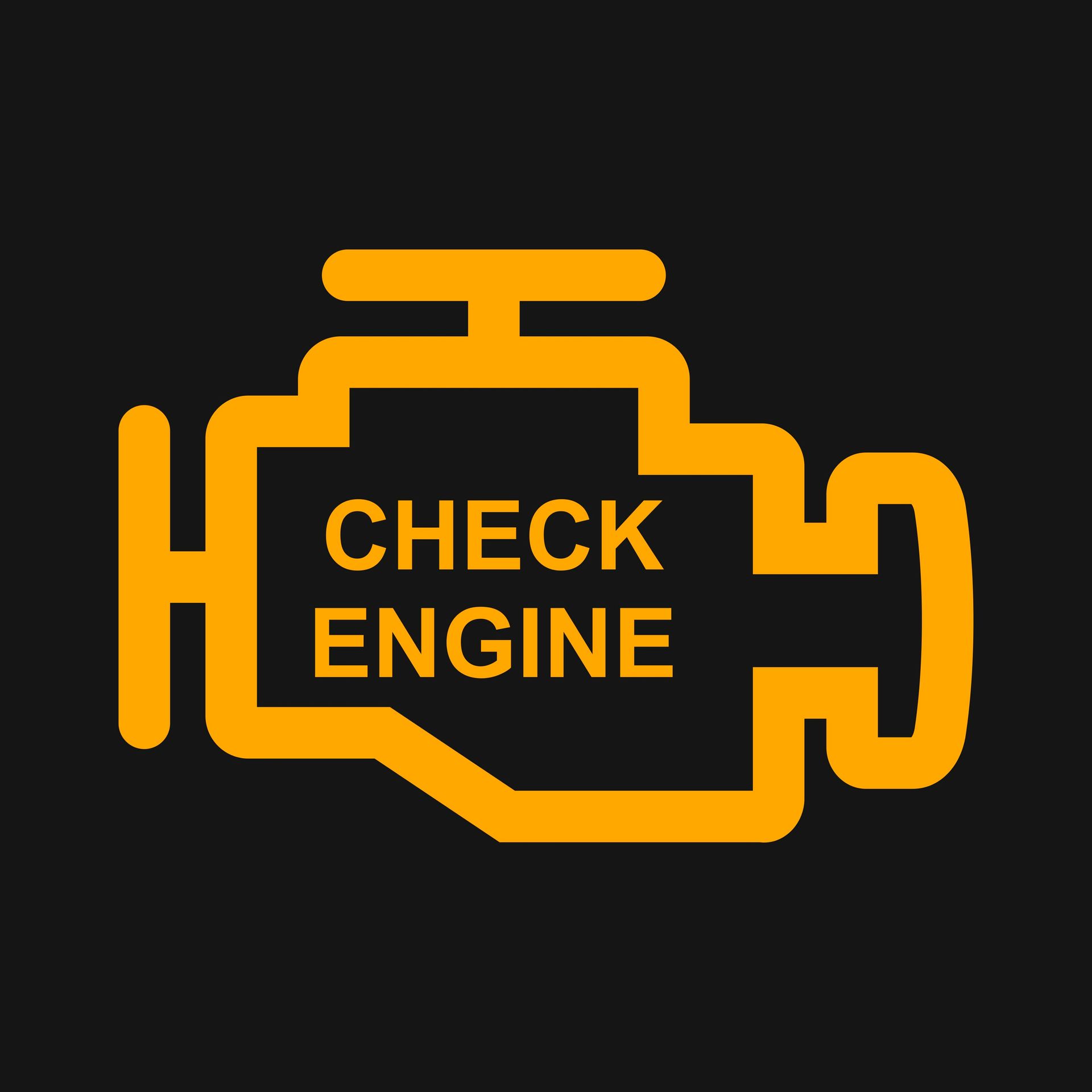

A flashing check engine light gets your attention in a way a steady light does not. The car might start shaking, the exhaust note may change, or the engine may feel weak when you try to accelerate. Even if the light only flashes for a few seconds, it is not a warning to shrug off.
Most flashing check engine lights are tied to an active engine misfire.
That does not mean the repair is always as simple as spark plugs. A misfire can start in the ignition system, fuel system, air intake, wiring, compression, or engine control system. The light is the warning. Testing is what finds the real cause.
What A Flashing Check Engine Light Usually Means
On most vehicles, a flashing check engine light indicates the engine is misfiring so badly that it risks damaging the catalytic converter. A misfire happens when one or more cylinders fail to burn the air-fuel mixture correctly.
The engine may shake because one cylinder is not producing power the way it should. You may also feel hesitation, rough idle, poor acceleration, or a fuel smell from the exhaust.
A steady check engine light gives you time to schedule diagnostics. A flashing light calls for faster attention because the problem is active while you are driving.
Why Misfires Trigger The Warning
When a cylinder misfires, unburned fuel can leave the engine and enter the exhaust. The catalytic converter is built to clean exhaust gases, not handle raw fuel. If too much unburned fuel reaches it, the converter can overheat.
A damaged catalytic converter can become restricted, rattle internally, reduce power, trigger more codes, or fail an emissions test. It is also one of the more expensive parts of the exhaust system.
That is the main reason the light flashes. The vehicle is warning you that continued driving could damage more than the part causing the misfire.
Can It Be Something Other Than A Misfire?
In most cases, a flashing check engine light points to a misfire. Still, the cause of the misfire can vary widely. Worn spark plugs, weak ignition coils, bad coil boots, leaking fuel injectors, vacuum leaks, low fuel pressure, wiring faults, sensor issues, and low compression can all create misfire symptoms.
Some vehicles may also flash the light for severe engine or emissions-related faults that can damage the catalytic converter. Either way, the message is the same: the vehicle should not be driven like normal until the problem is checked.
The important distinction is that a flashing light does not indicate which part failed. It only tells you the fault is serious enough to need prompt testing.
How The Car Might Feel
Some misfires are obvious. The engine shakes at idle, the car jerks during acceleration, or the light flashes every time you climb a hill. Other misfires are more selective. They may show up only under load, at highway speed, during cold starts, or after the engine gets hot.
A coil can fail once heat builds. A spark plug can struggle under higher cylinder pressure. A fuel injector may work at idle but not deliver enough fuel under demand. A vacuum leak may be more noticeable at low speeds.
Tell the shop when the flashing happens. Does it happen during acceleration? At idle? Only after the engine warms up? Those details help one of our technicians better follow the symptom.
Should You Keep Driving?
If the check engine light is flashing, ease off the gas and avoid hard acceleration. If the engine is shaking, losing power, or smelling strongly of fuel, pull over safely and arrange service.
If the light flashed briefly and then stayed steady, the car may feel normal again. That does not mean the issue went away. The engine already recorded a problem, and the stored data can help explain what happened.
Driving a short distance to a nearby shop may be reasonable if the engine feels stable and the light is no longer flashing. Driving for days, taking the highway, or pushing the engine hard is not worth the risk.
Why Clearing The Code Can Hurt The Diagnosis
Clearing the check engine light before an inspection can erase useful information. The computer may store freeze-frame data, misfire counts, fuel trim readings, engine temperature, and load information from the moment the fault occurred.
That data helps narrow the testing. Without it, the shop may need to wait for the symptom to return before the full pattern is visible again.
A code reader can show which cylinder misfired or which system noticed a problem. It cannot prove whether the cause is spark, fuel, air, compression, or wiring. The vehicle still needs a proper diagnostic process.
How The Cause Is Found
A misfire inspection usually starts with stored codes and live engine data. From there, the testing may include spark plug inspection, ignition coil checks, injector testing, fuel pressure checks, vacuum leak testing, compression testing, and wiring checks.
Regular maintenance can help prevent misfires, especially when spark plugs, filters, and small leaks are addressed promptly. It will not stop every failure, but it gives the engine fewer weak spots to work around.
The goal is to fix the cause, not only make the light go away. If the wrong part gets replaced, the flashing light can return, and the catalytic converter may still be at risk.
Get Flashing Check Engine Light Diagnostics In Stockertown, PA, With Dave's Automotive
If your check engine light is flashing, your engine is shaking, or your vehicle feels weak under acceleration, Dave's Automotive in Stockertown, PA, can inspect the ignition, fuel, air, and engine data to find the cause.